Service as Software: three company types
The industrial revolutions of the last century made consumer products accessible to everyone. The current revolution is about to do the same for services.
But there is one important difference. Those revolutions achieved it at a single price: standardization. Everyone got exactly the same product. This time that price does not have to be paid. AI can produce fully personalized service at industrial scale.
That is why software has barely touched the services world until now, an industry of trillions of dollars. Personalized work always required more people in order to grow. That has changed. And it holds across the whole spectrum, from a five dollar gig on Fiverr to a multi-million dollar consulting project at McKinsey.
I see three types of companies being built around this wave:
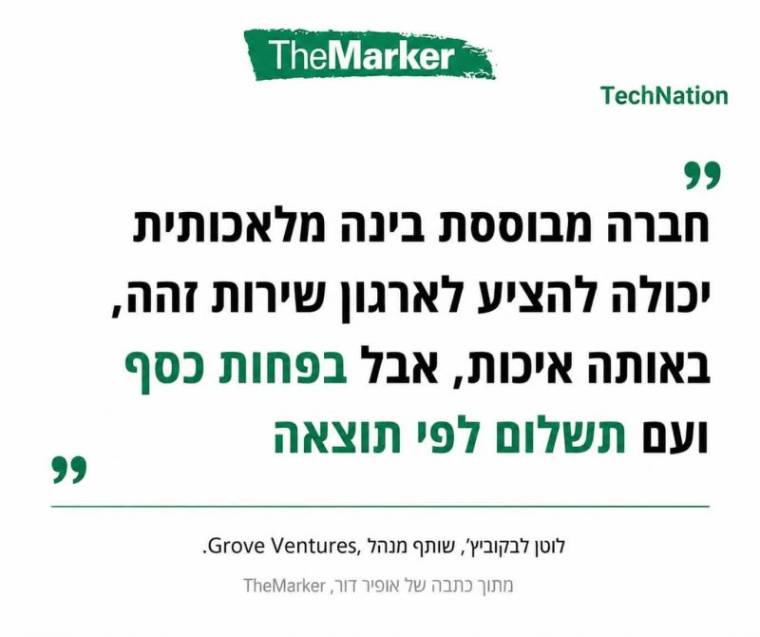
1. AI-native service companies. They sell the customer the finished work. Instead of hiring an accounting firm, the customer gets the audit. The report. The tax filing. And payment is by outcome instead of by hour.
2. Digital workforce platforms. Software that enters an organization and performs work that today is split between internal teams and external vendors. The organization buys a platform measured on results, and the savings sit in headcount and third-party vendor budgets. Line items several times larger than the historical software budget.
3. New services born from zero. Services no one ever offered, because the provider's billable hour cost more than the customer could pay. A dedicated legal counsel for every small business. A family office for every household. A one-on-one private tutor for every child. This category does not appear in any market deck yet, because its market has not been born.
And there are still big open questions. How do you sell this, when buying the Big 4 is still the safest decision in the room. Which business model works, when the value is delivered in two weeks and you are asking for an annual subscription. And whether the margins end up in software-company economics or stay in consulting-firm economics.
We published this thesis at Grove Ventures almost a year ago under the name Service as Software, and we have kept refining it since. A growing share of my time goes to these three categories, because I believe some of the next giant companies will be built here.
The first two fight over budgets that already exist. The third builds new demand. If history repeats, that is where most of the value will be created.