Your Pricing Unit Decides Your Margin
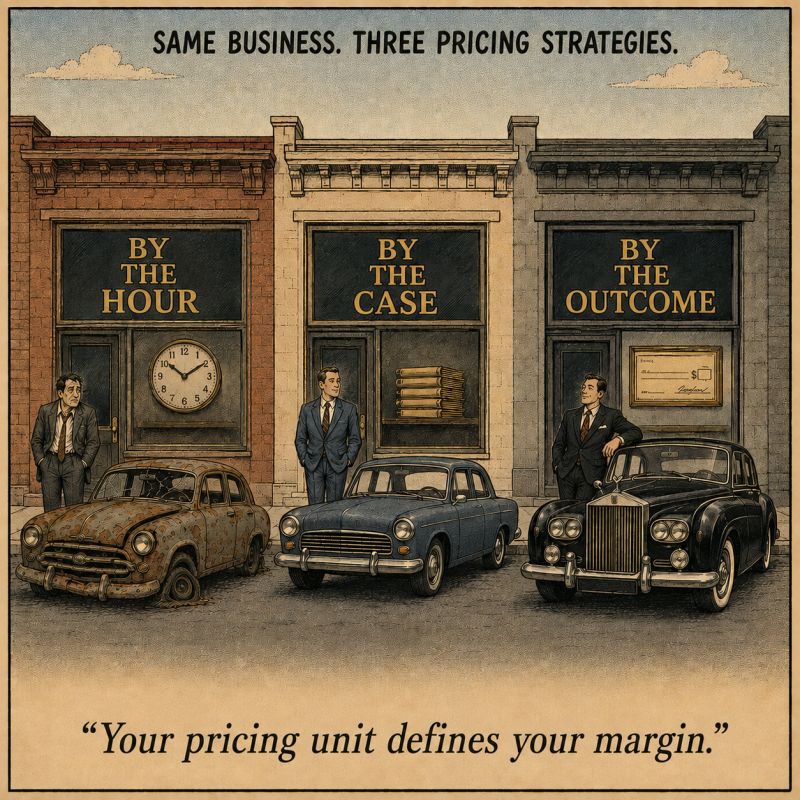
Most AI startups are resellers of their model provider. Most founders don't notice, because the disguise is a pricing model that sounds fair: consumption.
Here's the one-question test: what unit does your startup charge in? There are only three answers, and they're a ladder.
Charge per token, and you bill in the same unit you buy. Every price cut your model provider ships flows straight through to your customer, and your margin is whatever markup survives the pass-through. That's a reseller.
Charge per insight, per answer delivered, per ticket resolved, and the unit flips. Intelligence is the fastest-falling input in your stack. Your cost collapses. Your price doesn't. The gap is yours.
Charge per outcome, and your price lives inside the customer's result. The holy grail, and the hardest to reach: it takes attribution, trust, and contracts most startups can't get on day one.
Lawyers have been running this exact ladder for a century: by the hour, by the case, by the win. And here's what AI does to it: when the work gets 10x faster, the hourly lawyer earns less. The flat-fee lawyer keeps the difference. The contingency lawyer takes ten more cases. It's no accident that the most profitable law firm in the world bills a share of the deal, not the hours.
I spent my legal internship year in a tax department, and the pattern was impossible to miss: the tax lawyers taking a share of the tax they saved were earning more per hour than anyone billing by it. The "no win, no fee" people drive the best cars.
Tokens get cheaper every quarter. Who keeps the difference: you or your customer? Your pricing unit already decided.
Grove Ventures