Software engineers are losing the frontier premium
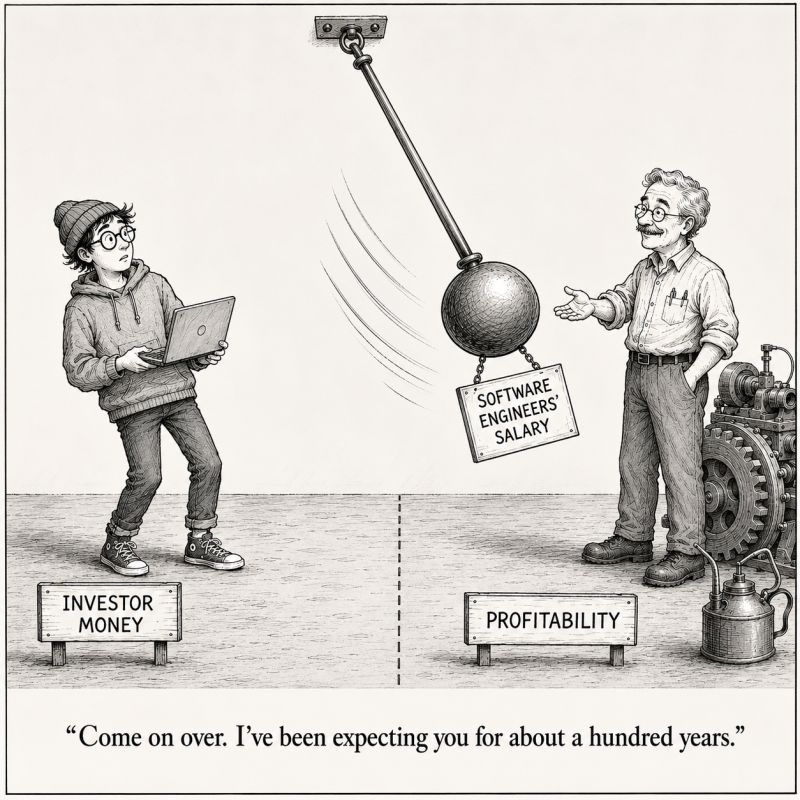
100 years ago, the mechanical engineer was the hero of the story. What happened to them after that tells you more about the future of software engineers than any layoff headline you've read this year.
The fear right now is that AI means fewer engineers. That part is true, up to a point. Each engineer can do more, and some of the work that used to need a salary now just needs tokens.
But the number of engineers isn't the interesting question. The interesting question is who pays them. For the last thirty years, venture capital set what software engineers earned. And it paid them like an investment, not like a cost. The logic was growth, so the salaries ran high.
Now AI is pushing software into every business, including ones that were never software companies. Those companies pay engineers out of their profits, not out of a funding round. The bill moves from the cap table to the P&L. That shift changes the pay, not the job. The work stays. What goes away is the frontier premium, the extra that venture money paid because it was betting on growth, not on the work.
Mechanical engineers didn't vanish. There are still 293,000 of them, earning double the national median. They just stopped being the frontier and became infrastructure.
Software is next.